
Hurricane & Storm Debris Removal
in Sarasota, FL — We Answer the Call
Roll-off containers for private property storm cleanup across Sarasota County. Roofing debris, fallen trees, flood-damaged contents, fence sections — booked fast when your property needs it most.
What Private Property Storm Cleanup Actually Requires
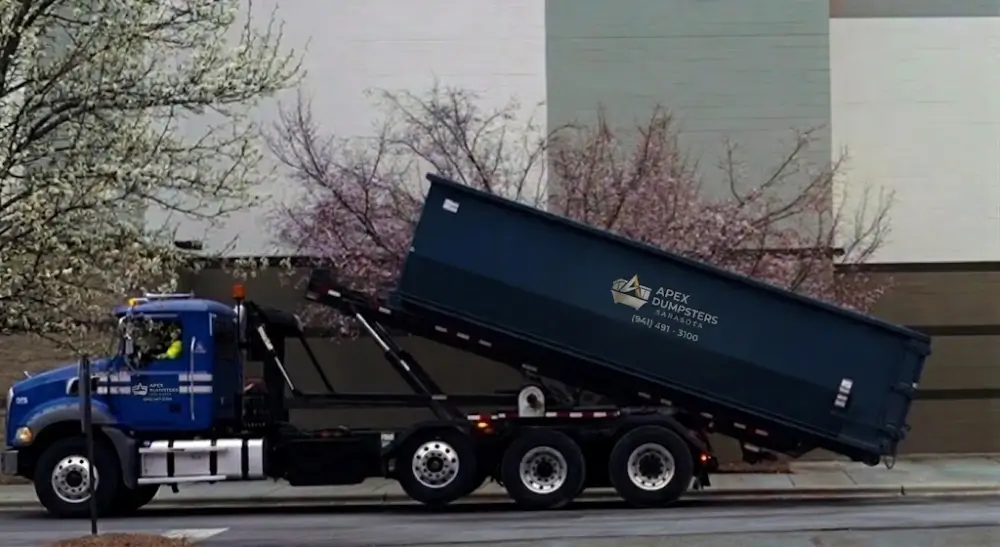
After Hurricane Milton hit the Sarasota area, property owners across Sarasota County found themselves in a familiar situation: debris everywhere, county curbside focused on public right-of-ways, and private property cleanup falling entirely on the homeowner. The county’s debris program covers vegetative material on public roads in unincorporated areas — it does not cover what is in your yard, on your roof, or inside your flood-damaged structure.
That gap is where a roll-off dumpster fits. One container on your property handles the debris volume that would otherwise take weeks of manual hauling to the CCSWDC at 4000 Knights Trail Road in Nokomis — and during storm recovery, that facility’s hours and capacity matter. A roll-off handles your private property cleanup on your schedule, without requiring multiple trips during what is already a stressful period.
Wind-Damaged Roofing
Shingles, tiles, felt, damaged decking. Storm debris roofing is often wet and heavier than a planned tear-off — size up and confirm material type when you call.
Fallen Trees & Vegetation
Downed palms, oaks, and shrubs. Large root balls and trunk sections are dense and heavy — factor into sizing when describing the job.
Flood-Damaged Contents
Furniture, flooring, drywall, and household items damaged by water intrusion. Standard C&D roll-off handles this debris type — book as mixed load.
Pool Cage & Screen Enclosures
Aluminum screen cage material is common storm debris in Sarasota County. Light in weight, high in volume — size for cubic yards on pool cage jobs.
Fencing & Structural Debris
Wood fence sections, metal posts, gate material. Standard roll-off accepts fencing debris — mention if there are any pressure-treated sections.
Flooded Household Items
Water-damaged appliances (freon removed first), furniture, carpeting, and non-hazardous household contents from flood damage go in a standard roll-off.
County Storm Cleanup vs. Private Roll-Off — What Each Covers
The biggest source of post-storm confusion in Sarasota is not knowing which debris the county handles and which falls on the property owner. Understanding the line before you call saves time.
🏛️ Sarasota County Storm Program Covers
Vegetative debris on public rights-of-way in unincorporated county areas
Curbside pickup of separated debris piles — vegetation separate from C&D
FEMA-eligible debris from qualifying storm events on public property
Does NOT cover debris on private property or inside structures
Does NOT cover mixed loads — must be separated by type for county pickup
Does NOT operate on any fixed pickup schedule after a storm
🗑️ Private Roll-Off Covers
All debris on your private property — yard, driveway, interior
Mixed loads of roofing, vegetation, household contents, and structural debris
Delivery and pickup on your schedule — not dependent on county routing
Immediate availability (subject to post-storm demand) — call to confirm
All loads disposed at CCSWDC under licensed and regulated process
Does NOT cover hazardous material — freon appliances must be serviced first
How Fast Can I Get a Dumpster After a Storm in Sarasota?
Honestly — it depends on when you call. During active storm recovery across Sarasota County, every roll-off provider in the market faces simultaneous demand. Providers who respond first win the jobs because property owners call down a list until someone confirms availability. After Hurricane Milton, property owners reported contacting five or more companies before finding one that answered and confirmed a delivery window. Calling immediately after you assess the damage — not after you have finished cleanup planning — is the most important factor in getting a container when you need one.
For serious hurricane seasons, booking before the storm is the most reliable approach. Call in May or early June to discuss pre-season availability — we can discuss options for properties that want a confirmed slot heading into hurricane season.
Can I Put Fallen Trees and Roofing Debris Together in One Dumpster?
Yes — a standard roll-off accepts mixed storm debris including fallen vegetation and roofing material together. The load books as a general C&D mixed load, not a yard-waste-only container. This is one of the practical advantages of a roll-off over county curbside pickup, which requires debris to be separated by type. For large amounts of pure vegetative debris — mostly fallen trees and palms with no roofing or structural material — a yard-waste container is the appropriate type and may be more cost-efficient. Describe the debris mix when you call and we book the right container type.
What Debris Cannot Go in a Storm Cleanup Dumpster?
Freon-containing appliances that have not had the refrigerant professionally removed — refrigerators, freezers, window AC units. These are common in flood-damaged homes and cannot go in a roll-off. Contact a certified HVAC technician to recover the freon before disposal. Asbestos-containing material, common in pre-1980 Sarasota structures damaged in storms, requires separate licensed disposal. Propane tanks of any size, batteries, hazardous chemicals, and paint with liquid remaining also cannot go in a standard roll-off. Everything else from a typical Sarasota storm cleanup goes in without issue.
Before Storm Season — How Sarasota Property Owners Prepare
The difference between a manageable storm cleanup and a weeks-long ordeal often comes down to decisions made before the storm arrives. Here is what experienced Sarasota property owners do before June 1.
Know Your Provider Before You Need One
Have a roll-off provider’s number saved before storm season starts. During active storm recovery, first-call advantage is the primary factor in getting a container. Knowing who to call before the storm is more valuable than any other preparation step.
Trim Landscaping Before Peak Season
Palm fronds and overhanging branches become projectiles in high winds. Pre-season trimming reduces both storm damage risk and post-storm cleanup volume. A yard-waste dumpster before hurricane season is a practical preparedness step for high-vegetation Sarasota properties.
Inventory Hazardous Items Now
Know where your freon-containing appliances are, whether your home was built before 1980 (asbestos risk in storm-damaged material), and where propane tanks are stored. Having this information ready speeds up post-storm disposal planning significantly.
Understand the County–Private Cleanup Line
Know what Sarasota County’s storm program covers (public ROW vegetative debris) and what it does not (private property, mixed loads, structural debris). Having this clarity means you call the right resource immediately after a storm rather than waiting for county pickup that will not come to your property.
Frequently Asked Questions — Storm Debris Removal Sarasota
Does FEMA cover dumpster rental for storm cleanup in Sarasota?
FEMA individual assistance may cover certain debris removal costs on private property after a federally declared disaster. The specifics depend on the declaration type, your property’s eligibility, and the documentation you have of storm damage. FEMA assistance does not typically pay roll-off rental providers directly — you pay the rental, document costs, and apply for reimbursement through FEMA’s Individual and Households Program. Check disasterassistance.gov for current disaster declarations affecting Sarasota County after any qualifying storm event.
Can a dumpster be delivered to a barrier island property after a hurricane?
Yes — we deliver to Siesta Key, Lido Key, Bird Key, and other barrier island addresses. Post-storm delivery to barrier islands adds complexity: bridge access may be restricted immediately after a major storm, access roads may have debris, and HOA communities may have their own protocols for storm recovery work. Call with the specific address and we will confirm access status and delivery feasibility before scheduling.
What size dumpster is best for hurricane cleanup on a typical Sarasota home?
It depends on the damage type. For primarily vegetative debris — fallen palms, trees, and landscape material — a 15-yard handles most single-family lots. For combined damage including roofing material, fence sections, and structural debris, a 20-yard is the safer starting point. For significant structural damage involving interior contents, flooring, and drywall on top of exterior debris, a 30-yard may be appropriate. Call and describe the damage — we will recommend the right size rather than having you guess.
How does storm debris disposal at the CCSWDC work during recovery periods?
The CCSWDC at 4000 Knights Trail Road in Nokomis operates on its standard schedule — Monday through Friday 8 a.m. to 4:30 p.m., Saturday 8 a.m. to 1:30 p.m. — during normal periods. During major storm recovery, the county may extend hours or activate additional drop-off sites. Check scgov.net for current post-storm guidance. Roll-off providers route loads to the facility through their standard disposal process — you do not need to manage the disposal logistics directly.
Storm Debris Piling Up? Call Now.
Describe your damage, your address, and your timeline. We confirm availability and delivery window on the same call — no forms, no waiting.
📞 Call Now — (941) 491-3100